
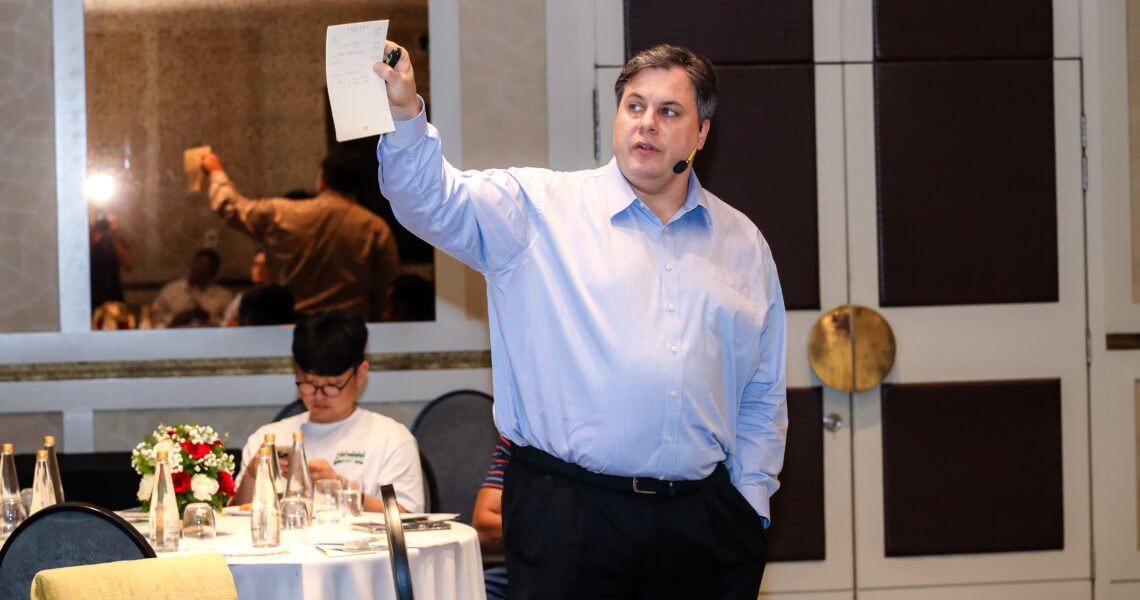
Building a Culture of Sustainable Excellence: Insights from Dave Becnel at the True North Lean CXO Summit, Ho Chi Minh City
There are speakers who share concepts, and then there are speakers who share clarity. When Dave Becnel, VP Quality Vietnam at Techtronic Industries TTi, addressed the audience at the True North Lean CXO Summit in Ho Chi Minh City, he offered something far more valuable than theory. He shared a grounded perspective on how sustainable excellence is truly built inside an organisation. His message was simple but powerful. Lasting performance comes from people who are capable, confident, and trusted to take ownership of their work.
Dave’s long journey through engineering, production, Lean promotion, manufacturing, and quality leadership has given him a deep understanding of what makes operations thrive. His experience is not academic. It comes from years of supporting teams, fixing processes, and building systems that continue working even when no one is watching.
Self Reliance The Heart of Sustainability
Dave began by highlighting one of the most overlooked truths in manufacturing. Production teams must be able to manage their own lines. In many factories, support departments become crutches. Lean teams, quality controllers, and engineers often step in to solve issues that the frontline should be capable of handling. This does not empower people. It weakens the culture.
True sustainability starts when production teams understand their process and can control quality, safety, cost, delivery, and improvement on their own. This mindset builds responsibility. It builds pride. And over time, it builds a culture where problems are solved at the source instead of being passed from one department to another.
Highly Capable Lines The Foundation of Operational Excellence
Dave emphasised that sustainable excellence depends on building highly capable production lines. These are lines where flow makes sense, ergonomics protect workers, equipment is reliable, and quality is designed to be right the first time. When these elements come together, the line becomes stable. Operators feel in control. Leaders stop firefighting and begin focusing on real improvement.
But achieving this capability rarely happens if improvement begins only after mass production starts. Many organisations wait for problems to appear before looking for solutions. By then, waste is expensive and change becomes disruptive.
3P A Better Way to Build Excellence
Dave introduced a concept that many organisations underestimate. The Production Preparation Process or 3P. Instead of separating design, industrialisation, and mass production into different phases, 3P brings everyone together early. Designers, engineers, pilot teams, and frontline operators sit together, explore options, and shape the process before it becomes permanent.
This early collaboration eliminates waste before it ever reaches the production floor. It helps teams design processes that are safer, simpler, more ergonomic, and more cost effective. It also helps operators feel deeply connected to the process because they helped create it.
Dave shared that real margin growth happens here, not after the line is already running. When waste is prevented instead of corrected, operational excellence becomes much easier to sustain.
Leadership Sets the Tone
At one point in his session, Dave pointed out something that every senior leader should reflect on. Frontline sustainability mirrors the discipline of the boardroom. If leaders do not prioritise stability, clarity, and support, the frontline will struggle to maintain improvement. But when leaders consistently model the behaviours they expect, the entire organisation follows that example.
A culture of excellence needs strong expectations from the top and strong empowerment at the bottom. When those two forces meet, sustainability becomes natural.
Problem Solving Keep It Simple Keep It Together
One of the most human parts of Dave’s presentation was his reminder that problem solving does not need to be complicated. Fancy tools and complex methodologies are not the answer. What matters most is getting the right people in the same room and working through the issue with discipline and honesty.
Simple formats like 4C or RCCA are often enough to solve even serious problems when they are used correctly. The key is clarity. Teams must understand the real problem. They must understand the real root cause. And they must agree on how to prevent it from returning.
When organisations commit to this kind of simple, shared thinking, improvement becomes much faster and far more consistent.
Three Lessons That Stay With You
Dave wrapped up his presentation with three lessons that apply to any organisation striving for lasting excellence.
Empower people first
Self reliant teams build ownership and pride. When people feel capable, sustainability follows naturally.
Build production friendly designs
Cross functional collaboration during preparation and design prevents waste, improves quality, and creates margins before production begins.
Use simple problem solving
Strong teamwork and simple tools used with discipline can solve most issues faster than complex methods used without understanding.
A Message That Will Influence Leaders For Years
The True North Lean CXO Summit brought together leaders from across Asia who are shaping the next chapter of operational excellence. Dave Becnel’s message stood out because it was real. It was practical. And it reminded everyone that improvement begins and ends with people.
In today’s world of technology and automation, his presentation was a timely reminder. Sustainable excellence does not come from tools. It comes from cultures built on trust, clarity, and shared ownership. When people are empowered to control their work and leaders support them with discipline and consistency, organisations do more than improve. They transform.