
Smart Lean and the Real Story of Digital Transformation
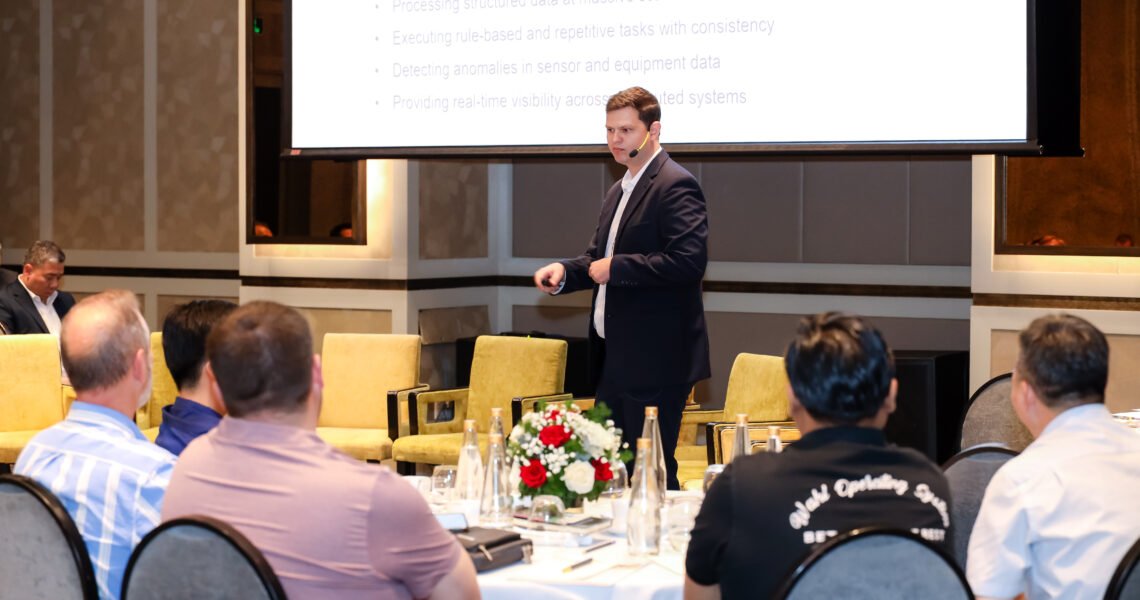
Presented by Ian Gray at the True North Lean CXO Summit
Most factories today are filled with conversations about AI, dashboards, automation, and digital transformation. But if you step onto the shop floor and watch how work truly happens, the story is very different. Machines run, stop, and start again. Operators juggle tasks. Supervisors search for the right information. And amidst all this, many expensive digital tools remain untouched. That gap between ambition and reality is where most transformation efforts begin to fall apart.
This was the heart of the message delivered by Ian Gray at the True North Lean CXO Summit. His session did not romanticize technology. Instead, it brought forward a truth that many leaders feel but rarely say out loud. Technology is not failing us. We are failing to prepare ourselves to use it meaningfully. The world may be excited about AI, but factories are still struggling with something as basic as accurate and consistent data.
When Truth Hits Hard
Ian opened his talk with numbers that made the room go quiet. Most AI initiatives stall. Many pilot projects never show financial results. And across many industries, the biggest complaint is not about algorithms or computing power. It is about unreliable data and unclear problem statements. What shocked people most was his remark that a simple Excel sheet often performs better than a sophisticated platform. Not because Excel is magical, but because operators know how to use it and trust what it tells them.
This is the part leaders often forget. A tool is only as powerful as the culture, clarity, and capability of the people using it.
Everything Begins at the Gemba
Ian repeatedly emphasised the importance of the gemba. The real work happens beside machines, not in meeting rooms. If a digital tool does not solve a real pain point at the gemba, it becomes another abandoned experiment. When operators do not find it useful, it disappears quickly. When supervisors cannot rely on the information, it loses value. And when frontline teams do not feel ownership, no transformation will ever last.
The foundation of Smart Lean is simple. Start by understanding the real problem deeply. Determine if it actually needs technology. And if it does, choose the simplest digital tool that supports the work without complicating it.
Quality of Data Matters More Than Quantity
One of the points that resonated strongly with many attendees was Ian’s perspective on data. In many factories, leaders believe collecting more data will automatically help them make better decisions. But without structure and discipline, more data only creates more confusion.
Ian shared the example of downtime tracking. Before the digital solution, operators filled out manual sheets that often got lost or filled incorrectly. Supervisors waited too long for insights. By the time the data was compiled, the moment for action had already passed. A simple tablet-based capture system changed everything. Suddenly, insights were immediate. Operators could see patterns right away. Supervisors could take action before issues grew. The solution was not glamorous, but it was exactly what was needed.
The Real Power of People
A major theme in the session was the idea that people, not machines, remain the most intelligent part of any operation. Operators understand context. They sense irregularities. They can interpret signals that no sensor or algorithm can read. They use intuition built over years of hands-on experience.
Technology has its own strength. It handles structured data at a scale no human can manage. It identifies deviations quickly. It performs repetitive tasks consistently without fatigue. Ian made it clear that smart factories are created not by replacing people, but by combining human judgement with digital assistance in a balanced way.
Knowing When to Digitize
Ian encouraged leaders to be thoughtful when choosing which processes should be digitized. Not every task needs AI or automation. Some tasks benefit more from simple checklists, visual controls, or manual verification. Others truly require the speed and structure that technology offers.
His example of document analysis made this point clear. Reviewing large volumes of compliance documents manually took hours and carried high risk. When digital tools were introduced to ingest, translate, and extract critical information, they immediately reduced workload and improved accuracy. This was a place where digitization genuinely made sense because it amplified human capability.
Early Signs a Project Is Heading in the Wrong Direction
Ian shared warning signs that often show up early, long before a project officially fails. If a company buys technology before clearly identifying the problem, trouble is coming. If the data collected becomes more important than the problem it is supposed to solve, teams will lose direction. If operators do not trust the system, adoption will stop instantly. And if dashboards are created but no one looks at them, it means they were built for the wrong audience.
At that point, the only wise move is to pause, return to the gemba, and rediscover what the problem really is.
Each Factory Has Its Own Journey
Ian reminded the audience that transformation does not follow one universal path. Some factories are still building discipline in paper-based processes. Others are ready for automated data capture or advanced analytics. The Smart Lean journey respects the maturity and readiness of each organization. It is not about rushing toward AI. It is about growing step by step, in a way that creates trust and confidence at every stage.
The Principles Every Leader Should Remember
Ian closed with lessons that every factory, regardless of its size or industry, can apply immediately.
Always begin at the gemba. Every improvement should make life easier for the people doing the work.
Treat digitalisation as a gradual journey. Start small and grow naturally.
Put people first, then process, and bring technology only when it truly supports both.
Reliable data always beats large but unreliable datasets.
Prove value on a small scale before expanding any digital tool across the plant.
These principles connect Lean thinking with modern digital transformation. Lean creates discipline. Digital tools create visibility. Together, they create factories that adapt quickly and learn continuously.
Ian Gray’s session at the True North Lean CXO Summit was a reminder many leaders needed. The future of smart manufacturing is not built on technology alone. It grows from people who think clearly, understand problems, and use technology with purpose. When organizations get this right, transformation becomes natural and sustainable, not forced or fragile.