
Getting a Production Plant Back on Its Feet
When the company shifted operations to a new facility, the mood was optimistic. The building was modern. The layout looked promising. The machines were better than before. On paper, everything suggested performance would improve.
Reality was different.
Production hovered around 55 percent of expected capacity. Orders were delayed. Supervisors were constantly juggling priorities. Operators were working hard, yet results did not reflect the effort. Something was clearly off, but no one could point to a single obvious cause.
So instead of reacting with quick fixes, the leadership team chose to slow down and really look at what was happening.
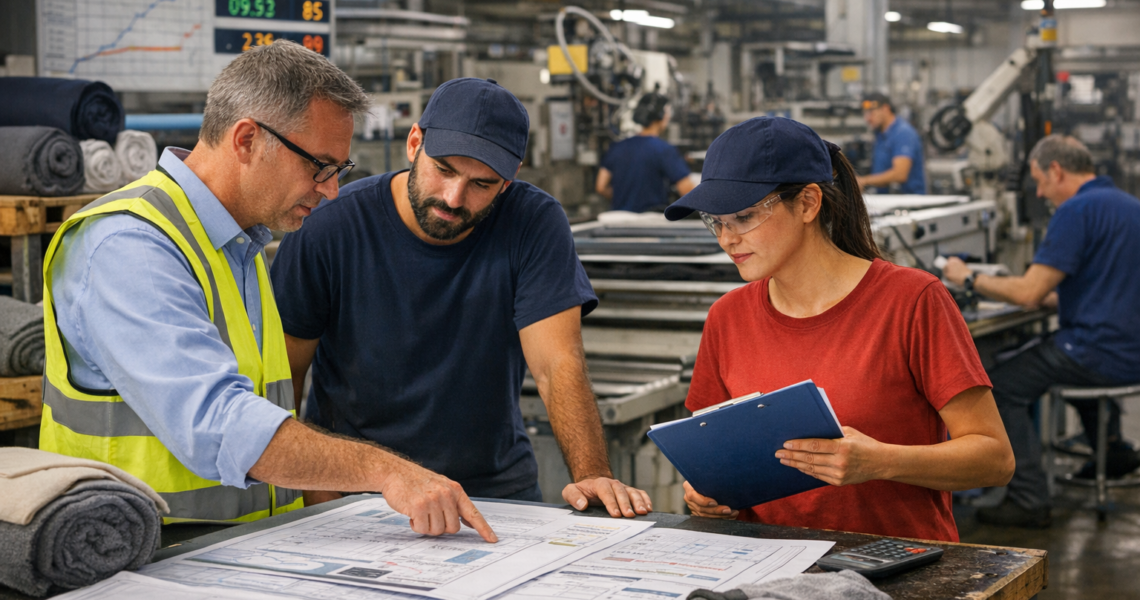
For several weeks, the focus was simple: observe, listen, and understand. Time was spent on the shop floor watching how work flowed from one station to another. Conversations were held with operators, maintenance teams, planners, and supervisors. Equipment usage was reviewed in detail. Not from reports alone, but in real time.
One supervisor said it honestly: “We are busy all day, but it doesn’t feel smooth.” That sentence captured the problem perfectly.
As the review progressed, a few patterns became clear. One production area was overloaded almost every shift. Work piled up there, creating pressure and delays downstream. Meanwhile, other departments had capacity they could not fully use. The imbalance was slowing the entire system.
Technology told a similar story. Some advanced machines were being used for relatively simple tasks, while automated systems capable of much higher output were not consistently scheduled. It was not a competence issue. It was a coordination issue.
Processes had also become more complicated than necessary. Extra steps had been added over time. Workarounds had become normal practice. Handoffs were not always clearly defined. None of these were dramatic problems on their own, but together they created friction throughout the plant.
Material losses were higher than expected. When traced carefully, they were linked to unclear sequencing and inconsistent handling. Small inefficiencies, repeated daily, were quietly costing the company significant money.
The improvement effort did not rely on dramatic restructuring. It focused on fundamentals.
Workloads were rebalanced so that no single area carried disproportionate pressure. Tasks were better aligned with equipment capability. Process steps were simplified where possible. Clearer standards were introduced so that everyone understood how work should flow.
Importantly, changes were tested with the people doing the work. Their feedback shaped the adjustments. When employees saw that practical suggestions were taken seriously, engagement improved noticeably.
Within months, stability began to return. Daily output became more predictable. Firefighting reduced. Material waste dropped, resulting in annual savings of approximately USD 385,000. More than thirty quality and safety issues were identified and resolved. Equipment utilization improved without requiring new capital investment.
Perhaps the most meaningful change was cultural. Conversations shifted from blame to problem solving. Teams felt more in control. Managers reported spending less time reacting and more time planning.
Looking back, one executive reflected, “The move did not break us. It exposed what we had not fully understood.”
The lesson is straightforward. New facilities and modern machines do not guarantee performance. Clear processes, balanced workloads, and disciplined coordination do. When those fundamentals are restored, results follow.