
When Nike Met Toyota: A Human Story About Lean, Leadership, and the Courage to Change
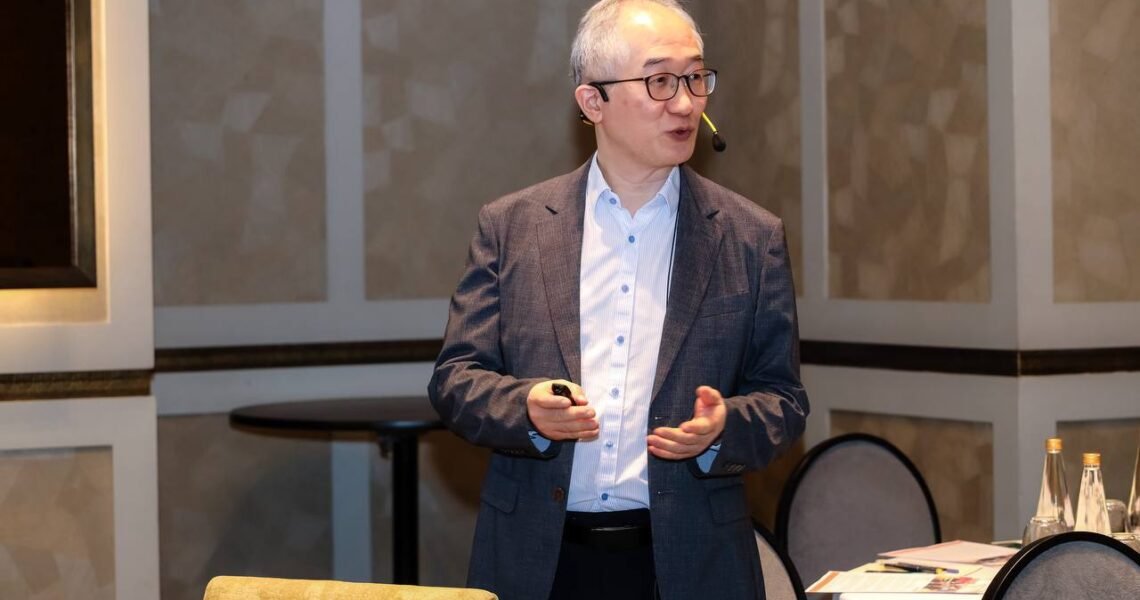
Based on the presentation by DJ Kim, presented at the True North Lean CXO Summit, Ho Chi Minh City
There are moments in business history when two worlds collide and something quietly revolutionary begins. When Nike met Toyota, it wasn’t just a meeting of a sportswear giant and the world’s most respected manufacturing system. It was a meeting between ambition and humility, between rapid growth and thoughtful discipline, between a company in crisis and a philosophy forged through generations of learning.
Nike’s story, as shared by DJ Kim, is not a tale of a brand chasing perfection. It’s the story of a company stumbling, questioning itself, and rediscovering what it means to solve problems at their root. In the early days, Nike’s success was unmistakable, yet beneath the surface lay cracks: exploding supplier networks, inconsistent quality, delivery failures, labor and compliance issues, media backlash, and financial decline. In 1998, the world’s most iconic sports brand found itself asking a question that would change its trajectory: Why is this happening, and how do we fix it?
That question eventually led them to Toyota.
With Toyota came a new lens, one not focused on tools, but on thinking. Nike embarked on what DJ Kim describes as “Lean 1.0,” a decade defined by the Age of the Tool. Factories shifted from batch to flow, lead times were cut dramatically, inventories fell, quality improved, and more than 700,000 team members felt the impact of Lean transformation. The numbers were impressive, but something wasn’t sticking. Gains plateaued. Some teams treated Lean as a compliance exercise rather than a living system. Improvement became an activity, not a habit.
This is where the real learning began, what DJ Kim calls Lean 2.0.
Lean 2.0 isn’t about tools. It’s about people, leadership, and culture. It’s about understanding that no amount of standardization will ever replace the need for engaged minds and empowered workers. Toyota’s wisdom echoed through the transformation: “We do the same work as other companies, but we do it very thoroughly.” What makes the difference is depth – thinking deeply, engaging honestly, and turning important actions into disciplined habits.
Nike’s journey highlights the profound truth that factories do not improve because tools are deployed. They improve because leaders learn how to see. Leader Standard Work, visual control, daily accountability, and leadership discipline formed the four interdependent pillars of Nike’s Lean Management System. These were not checklists, but commitments, daily, lived expressions of leadership.
Yet transformation did not stop on the factory floor. It expanded into product development, modernization, and the realization that making shoes is one of the hardest manufacturing challenges on the planet. Flexible materials, endless design variations, and complex assembly meant that automation alone could never be the answer. True modernization required thinking differently about design, engineering, and the development process itself, just as Toyota did when it reduced its vehicle development cycle from 48 months to 12. The future of competitiveness would depend not on machines but on minds.
And in an age where AI looms large, DJ Kim delivers a grounding truth: AI will not replace Lean. AI will accelerate it. It will shorten learning cycles, deepen insight, and open new pathways for discovery. But the heart of Lean, problem-solving, remains profoundly human. The courage to ask why. The humility to see problems as gifts. The discipline to return, again and again, to the root cause.
Ultimately, Nike’s story is not about footwear. It is not even about Lean. It is about organizations choosing to evolve. It is about the belief that every business, at its core, is a continuous journey of designing, producing, coordinating, selling, and leading with clarity and purpose. It is about leaders who choose to learn rather than command, and teams who choose to think rather than comply.
When Nike met Toyota, the real gift wasn’t a new system. It was a new way of seeing.
And in that way of seeing lies the future of every organization that wants to thrive, not by running faster, but by learning deeper.